What the New Glorieta de las Mujeres Libres Changes About Living in San José del Cabo
San José del Cabo’s new interchange is more than a traffic project. It offers a useful way to understand how infrastructure, time and everyday convenience shape the experience of living in a destination that has grown quickly.
-By Jhon Anderson
For years, crossing the old Fonatur roundabout was one of those small calculations that could quietly reshape an entire day in San José del Cabo.
A trip to the airport began earlier than the distance suggested. Dinner on the other side of town required a look at the clock before leaving home. A short drive along the Tourist Corridor could feel completely different depending on the hour, the season or whether traffic had already begun building around the intersection.
None of those decisions were dramatic on their own. That was precisely why the problem became so easy to accept. People adjusted. They added time, changed routes, avoided certain hours and planned around an intersection that had gradually become one of the most difficult points in the municipality.
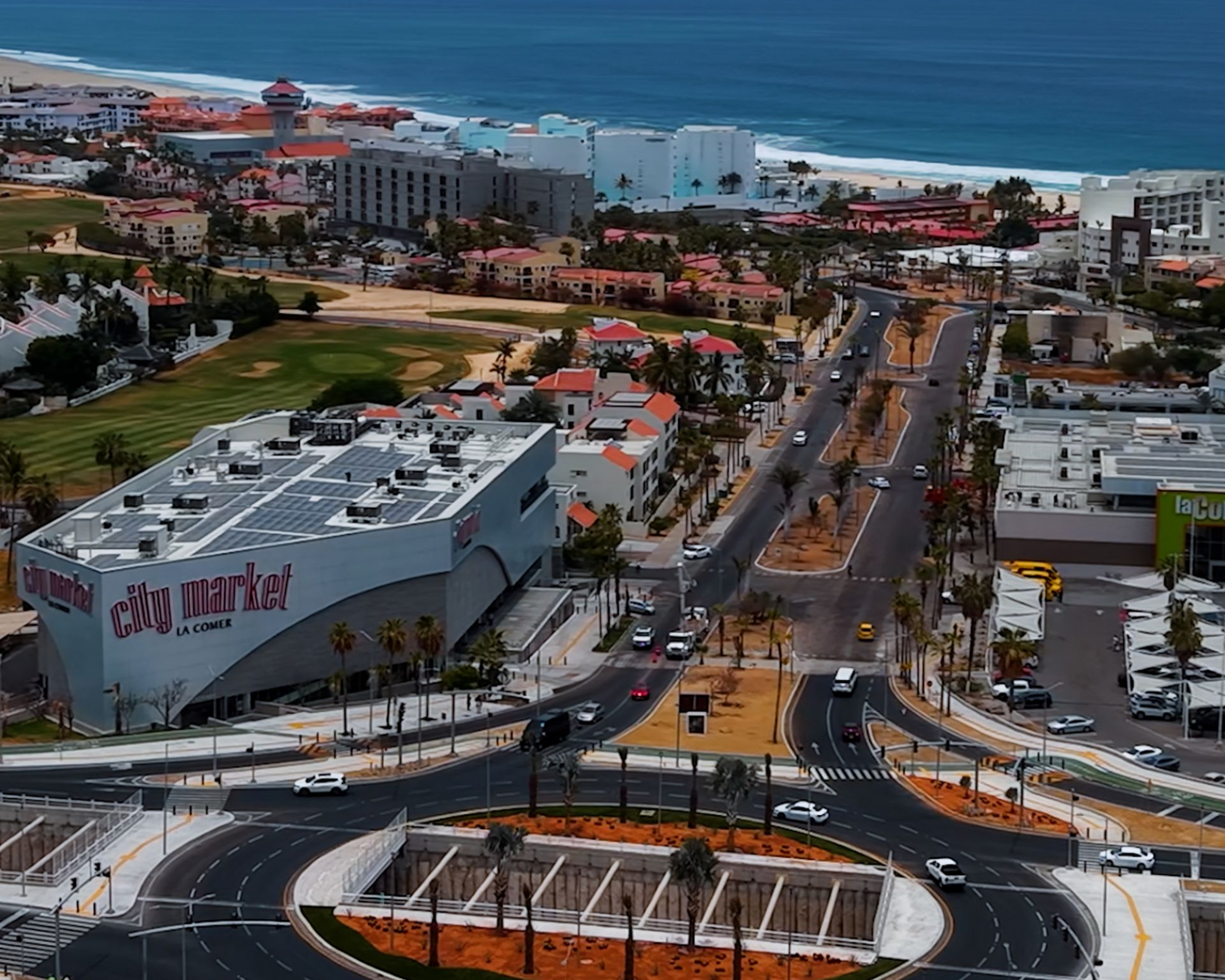
The former Fonatur roundabout sat at a place where several versions of Los Cabos met. Local residents moved between neighborhoods and commercial areas. Hotel and airport traffic passed through the same zone. Visitors continued toward the Tourist Corridor, while drivers connected with the toll road, the hotel zone and the wider route toward Cabo San Lucas. When too many unrelated journeys depend on the same point, even a relatively short distance begins to feel uncertain.
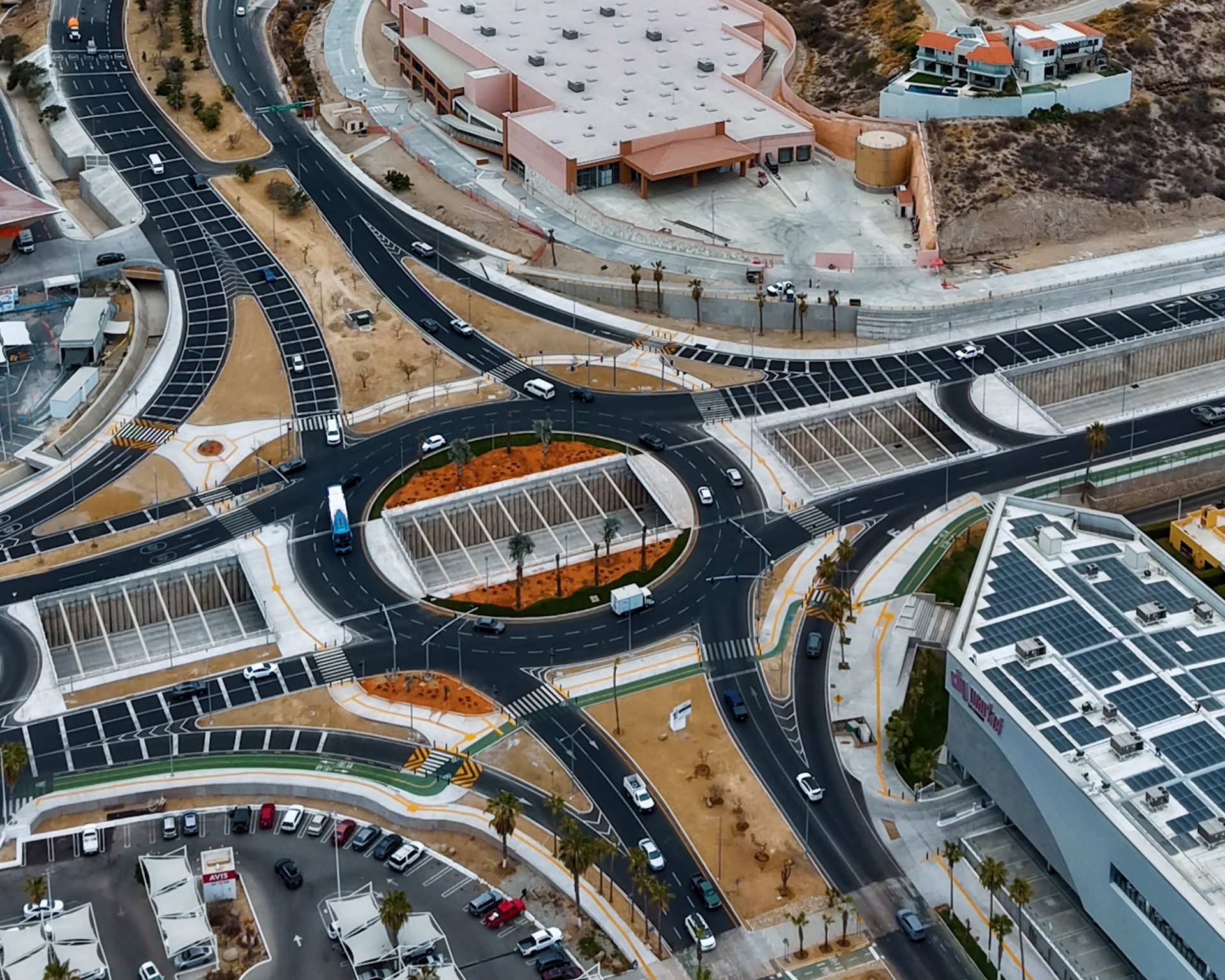
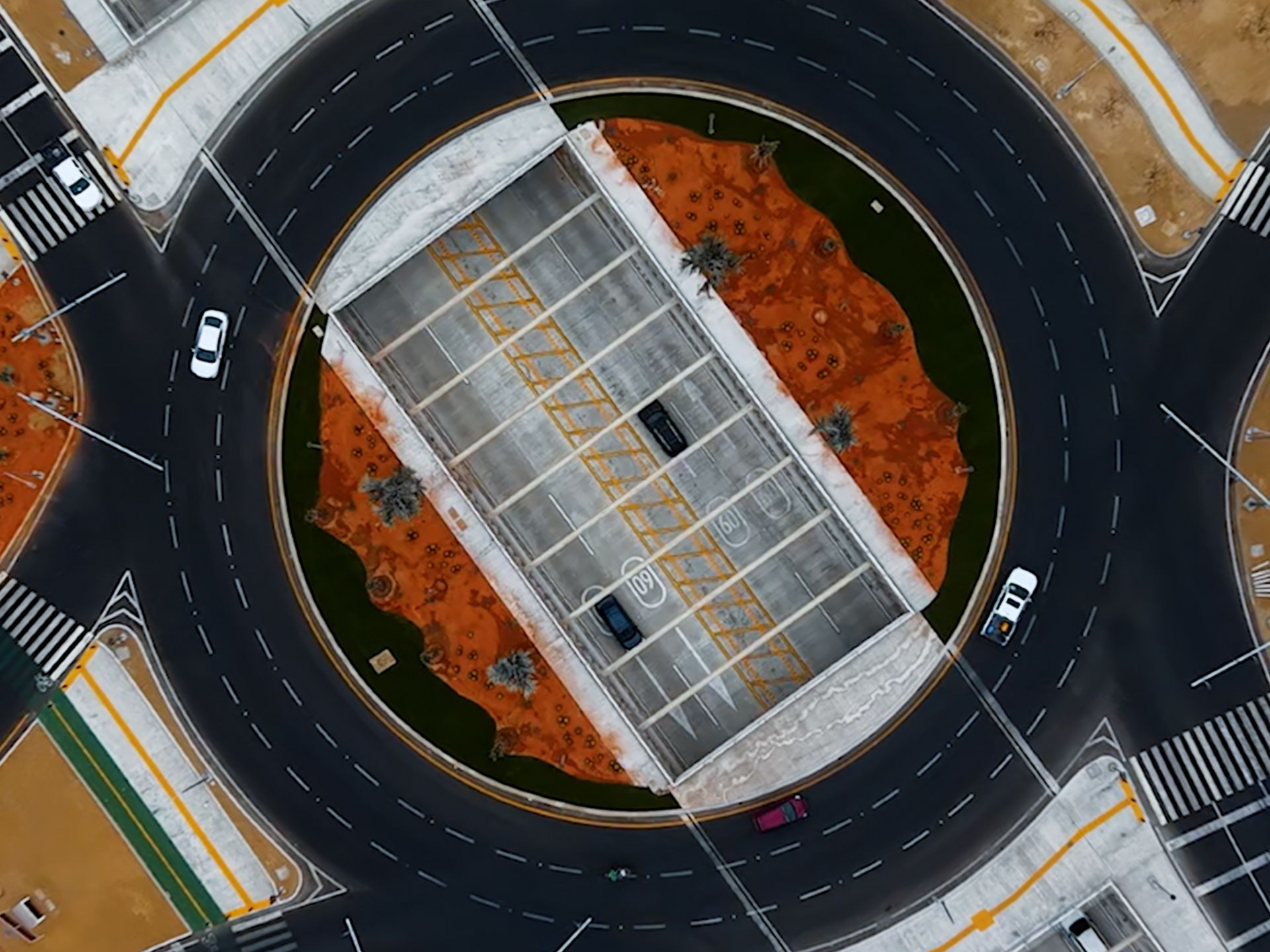
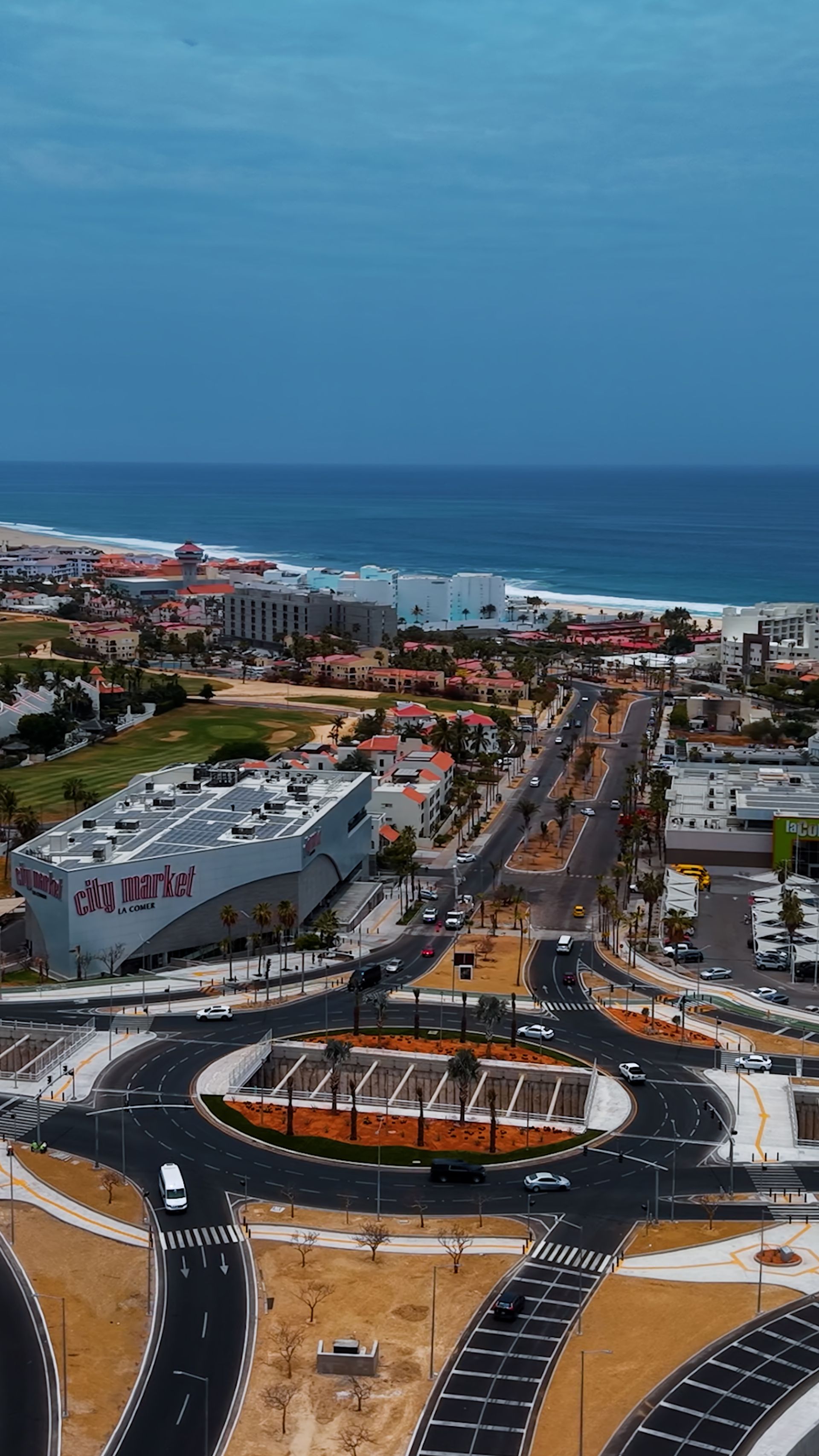
That is why the opening of the Glorieta de las Mujeres Libres de Baja California Sur on May 25, 2026, matters beyond the physical structure itself. The project replaced the old traffic pattern with a multi-level interchange designed to separate through traffic from local circulation at one of the busiest connections in San José del Cabo.
The more useful question, however, is not simply whether the new structure looks more modern or moves more vehicles. It is whether everyday life becomes easier to predict.
What Changed at the Former Fonatur Roundabout
The Glorieta de las Mujeres Libres officially opened on May 25, 2026, at the intersection most residents still recognize as the former Fonatur roundabout.
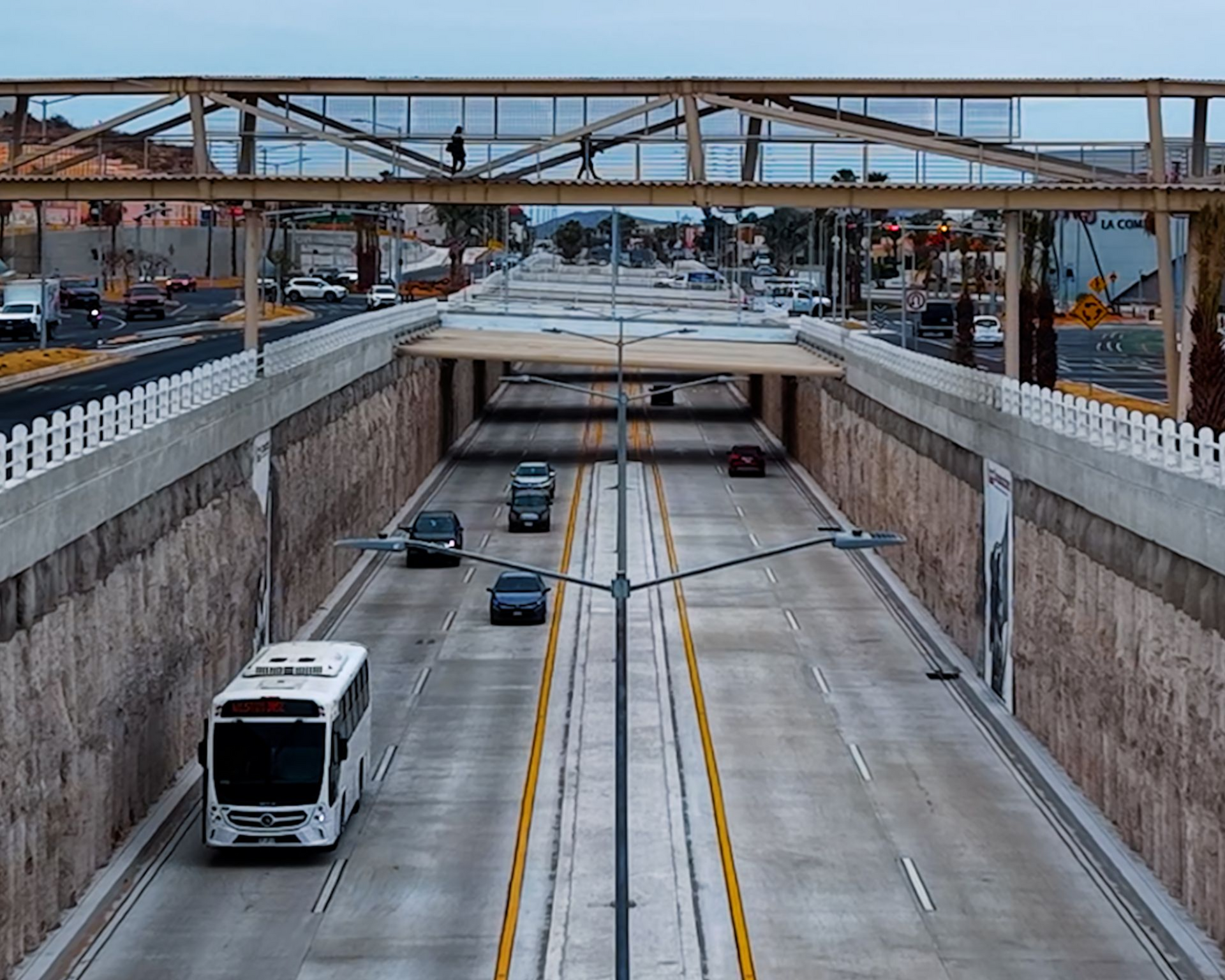
The overall intervention extends approximately 1.5 kilometers. At its center is a lower vehicular passage of roughly 800 meters, with two lanes in each direction carrying the principal flow of traffic below the surface intersection.
The essential change is easier to understand in ordinary language than in engineering terms. Drivers continuing along the main route no longer have to enter the same circular movement used by every vehicle turning toward local streets, nearby access points, the hotel zone or other connections around the intersection. Through traffic and local traffic have been given different paths.
That separation is the most important part of the design because it addresses the conflict that made the old roundabout so difficult. The problem was never only the number of cars. It was the number of different movements competing for the same space.
The project also includes elements that extend beyond vehicles. Official descriptions identify an approximately 840-meter bidirectional cycleway, 17 signalized pedestrian crossings, sidewalks, tactile paving, lighting, signage, a pedestrian bridge intervention, landscaping and an integrated stormwater-drainage system.
Those details matter because a major intersection should not be evaluated only by how quickly a car passes through it. It must also account for the people crossing it, the neighborhoods around it and the weather conditions that have historically complicated mobility in San José del Cabo.
Still, the design should not be confused with proof. The structure is complete, but its performance will be measured over time.
Why This Intersection Mattered So Much
The scale of the construction is notable, but the location explains why the project became so important. The intersection sits near one of the principal transitions between San José del Cabo and the wider Tourist Corridor. It also influences travel involving Los Cabos International Airport, the toll road, the hotel zone, commercial areas and routes continuing toward Cabo San Lucas.
In practical terms, that meant a delay at one point could affect completely different kinds of journeys. A resident heading to work, a family leaving for the airport, a visitor traveling to a resort and a driver making a local turn could all become part of the same congestion pattern. During busy periods, the problem did not remain contained within the roundabout. It extended into the approaches, changed the pace of nearby streets and made arrival times increasingly difficult to predict.
Municipal authorities report that more than 62,000 people use or move through the area each day. Federal authorities have also estimated that the new configuration could reduce some travel times by as much as 40 minutes.
That number should be understood carefully. It is an official projection, not a promise that every driver will save exactly 40 minutes on every trip. Some journeys may improve significantly, while others may experience more modest changes depending on direction, time of day and traffic conditions.
The larger point is not the exact number, but the fact that the intersection had become important enough to influence how San José del Cabo connected with the airport, the hotel zone and the rest of Los Cabos.
San José del Cabo Grew Faster Than Some of Its Infrastructure
San José del Cabo has changed considerably over the years The airport became busier. New hotels and residential communities appeared along the corridor. Restaurants, shopping areas, schools, medical services and hospitality concepts continued expanding. More people arrived for short visits, seasonal stays and permanent moves.
Much of that growth was visible in new buildings, newly launched communities and roads carrying more people between places that had once felt farther apart. Infrastructure does not always evolve at the same speed.
A destination can become internationally recognized while still relying on intersections, access roads and local systems designed for an earlier stage of growth. Residents usually feel that imbalance before it appears in a market report. They experience it through traffic, construction, longer buffers and the gradual loss of certainty around ordinary travel. The old Fonatur roundabout became one of the clearest expressions of that pressure.
This does not mean the new interchange completes the work San José del Cabo still needs. One project cannot resolve every mobility issue created by continued growth. Traffic can shift to another point. A smoother intersection can place new pressure on nearby access roads. Population, tourism and development will continue changing the volume of movement across the region.
What the project does represent is a more serious response to the scale San José del Cabo has already reached. Growth adds more activity, while maturity begins when the systems supporting that activity receive the same attention.
The Difference Between Distance and Friction
When people evaluate a location, they often begin with distance.
How far is the home from the airport? How many kilometers separate a community from downtown San José del Cabo? How close are the nearest restaurants, schools, hospitals or beaches? Those questions matter, but they do not fully explain how a location feels once someone lives there.
A map measures distance. A resident experiences friction. Friction is the uncertainty of a trip that can take fifteen minutes one day and forty the next. It is the difficult turn that makes a nearby destination feel inconvenient. It is the extra time added before a flight, the hesitation before accepting a dinner invitation or the decision to stay home because crossing one part of town feels like too much effort.
Two places can be close on a map and still feel far apart when the journey between them is unpredictable. The opposite is also true. A longer route can feel easy when movement is consistent, the turns make sense and the driver knows approximately how long the trip will take.
This is where the new interchange could change more than traffic flow. If it performs as intended, it may change the way residents perceive the relationship between different parts of San José del Cabo. The physical distance has not changed, but the effort required to move through it may.
That difference becomes especially important for people considering a move. A property may appear well located because it sits near the airport, the beach or downtown. The more useful question is whether those places feel naturally connected during an ordinary week.
Infrastructure as a Form of Everyday Luxury
Luxury real estate is often presented through what photographs well. Ocean views, architecture, terraces, pools, landscaping and interior design are easy to understand because they are visible. A buyer can see them immediately and imagine how they might feel.
Some of the most important qualities of daily life are less visible. Over time, I have come to think that they appear in the time it takes to leave home, the ease of receiving visitors, the confidence of reaching the airport, the ability to make a spontaneous plan and the amount of the city that feels realistically available during the week.
A home can be beautiful and still feel isolated if every trip outside the community requires too much planning. Another home may be more modest in scale but offer a daily routine that feels easier, more connected and more complete.
Infrastructure is one of the least photographed forms of luxury—and one of the most important once you actually live somewhere. That does not mean a road project defines quality of life on its own. Community, design, security, services, personal preferences and the character of the surrounding area all matter. But infrastructure shapes how easily those things connect.
A better intersection does not create a restaurant, a school, a hospital or a beach, but it can make them easier to include in daily life.
What This Could Mean for Palmilla and the Tourist Corridor
This distinction becomes particularly relevant when evaluating communities along the Tourist Corridor. Palmilla has long occupied a strong position between San José del Cabo, the airport and the wider route toward Cabo San Lucas. Its appeal was established long before the new interchange opened. The area combines beaches, golf, restaurants, residential communities and social spaces, including the kind of everyday gathering places described in our guide to the Palmilla Social Club.
The new project does not create that location advantage, but it may make one important part of it easier to experience.
For residents traveling between Palmilla, the airport, the hotel zone and downtown San José del Cabo, greater predictability at the former Fonatur roundabout could reduce one of the most familiar sources of uncertainty. The benefit would not be measured only in minutes. It would appear in the confidence of knowing when to leave, how easily guests can arrive and whether a plan across town feels simple enough to make without much thought.
This is also where the idea of connected living becomes more useful than a generic list of amenities. A community can offer a complete lifestyle inside or near its boundaries, but residents still interact with the city around it. They travel, receive visitors, attend appointments, meet friends, explore restaurants and use services outside the community.
Palmilla Dunes provides a good example of how internal convenience and external accessibility can complement one another. The community includes pool facilities, a fitness center, tennis, paddle and pickleball courts, as well as nearby dining, wellness and social options within Palmilla Dunes Plaza. Residents can already build much of their routine close to home.
A more predictable connection with the rest of San José del Cabo does not replace that convenience; it extends it. Someone interested in living in Palmilla should therefore ask more than how close the community appears to the airport or downtown. The better question is how naturally the surrounding network allows the resident to use the location.
The same principle applies to
Palmilla Dunes. Its appeal is not only the number of amenities it offers, but the way those amenities support an ordinary week. Better mobility outside the community can strengthen that experience without becoming the reason the community is valuable in the first place. This is an important distinction because public infrastructure may improve the usefulness of a location without guaranteeing the future value of a property.
What We Know—and What Still Needs to Be Proven
Because the interchange has only recently opened, the most credible way to evaluate it is to separate what is already known from what still requires observation.
| What we know now | What still needs to be proven |
|---|---|
| The interchange opened on May 25, 2026 | Performance during peak high-season traffic |
| The design separates through traffic from local circulation | Consistency of actual travel-time improvements |
| Pedestrian, bicycle and drainage elements are included | Performance through daily use and heavy rain |
| Authorities project significant time savings | Independent confirmation of the actual savings |
| The intersection connects several strategic routes | Whether congestion shifts to nearby access points |
The first major test will be high season, when airport arrivals, hotel traffic, local commuting and holiday movement place greater pressure on the area. Rain will provide another important test because the project includes an integrated drainage system, and municipal officials have explained that the design uses the natural grade and an existing drainage channel to reduce the risk of water accumulation. That is meaningful, especially in a place where residents understand how quickly heavy rain can change local roads.
But a drainage design should be judged under real conditions.
The same is true of signal synchronization, local turns, merging behavior and the possibility that congestion may move toward another nearby point. Drivers also need time to understand a new configuration, particularly when they have spent years approaching the intersection in a completely different way. The structure is complete, but the evidence about long-term performance is only beginning.
A Sign of a More Mature Destination
It is tempting to describe every large infrastructure project as transformational, but I believe the more useful interpretation is quieter.
The Glorieta de las Mujeres Libres is important because it acknowledges that San José del Cabo can no longer rely on systems designed for a smaller, less connected destination. The scale of the city changed, and this project attempts to make one of its most important intersections function at that new scale.
That is not the same as saying every infrastructure challenge has been resolved. A mature destination is not one without traffic, construction or difficult decisions; it is one that begins responding to those pressures with projects proportionate to the problem.
For future residents, this matters because the quality of a destination is not defined only by what happens inside private communities. It is also defined by how well the city around them works.
The beaches, golf courses, restaurants and homes may be what first attract attention. The roads, access points, services and everyday systems often determine whether the lifestyle remains enjoyable after the novelty disappears. This is why infrastructure belongs in a real-estate conversation, even when it does not appear in the property brochure.
Final Thoughts
For years, the old Fonatur roundabout asked residents to make small adjustments that gradually became part of living in San José del Cabo. People left earlier, checked traffic, added more time before the airport and sometimes thought twice before crossing town. The real measure of the new interchange will be whether those calculations become less necessary. The most successful infrastructure eventually becomes almost invisible because people stop discussing the project once they no longer have to organize their day around the problem it was built to solve.
If the Glorieta de las Mujeres Libres achieves that, its greatest contribution will not be the scale of the structure or the number of lanes beneath it. It will be the time, confidence and spontaneity returned to ordinary life.
That may sound less dramatic than a ribbon-cutting ceremony, but for the people who live here, it would be far more meaningful.
Experience the Lifestyle Behind the Location
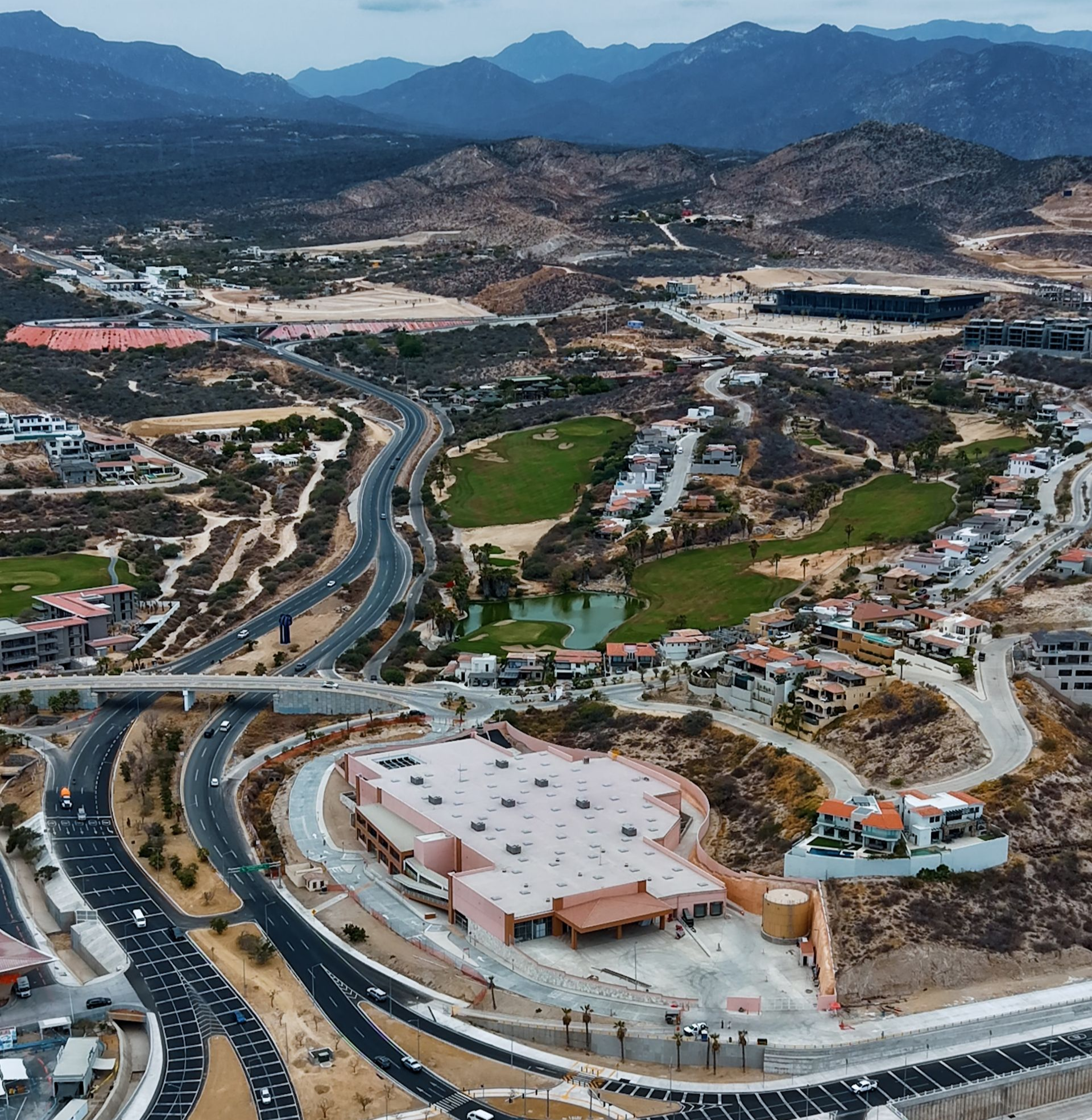
Infrastructure shapes daily life but choosing the right community is what truly defines the experience. Explore available homes in Palmilla and discover why it remains one of Los Cabos' most desirable places to live.
Frequently Asked Questions
Is the Glorieta de las Mujeres Libres open?
Yes. The Glorieta de las Mujeres Libres de Baja California Sur officially opened on May 25, 2026, in San José del Cabo. It replaced the traffic configuration at the intersection commonly known as the former Fonatur roundabout.
Is this the same location as the old Fonatur roundabout?
Yes. Many residents and visitors still refer to the area as the Fonatur roundabout because that was the familiar local name for years. The official name of the new project is Glorieta de las Mujeres Libres de Baja California Sur.
How does the new interchange work?
The main change is the separation of through traffic from local circulation. Vehicles continuing along the principal route use a lower passage with two lanes in each direction, while local turns and access movements remain at the surface level around the signalized roundabout.
How large is the project?
Official sources describe a total intervention of approximately 1.5 kilometers. The lower vehicular passage extends roughly 800 meters.
Does the project improve access to Los Cabos International Airport?
The interchange was designed to improve movement involving San José del Cabo, the airport, the toll road, the hotel zone and the Tourist Corridor. Because it recently opened, the consistency of those improvements still needs to be evaluated through regular use and peak traffic periods.
Has the interchange already reduced travel times by 40 minutes?
Federal authorities estimated that some trips could be shortened by as much as 40 minutes. That figure is a projected benefit, not a guaranteed saving for every driver or every route. Actual results will depend on direction, time of day, traffic volume and how the wider road network performs.
Does the project include pedestrian and bicycle infrastructure?
Yes. Official project descriptions include an approximately 840-meter bidirectional cycleway, 17 signalized pedestrian crossings, sidewalks, tactile paving, lighting, signage and a pedestrian-bridge intervention.
Was the interchange designed to handle heavy rain?
The project includes an integrated stormwater-drainage system. Municipal officials have said the design considers the natural grade and nearby drainage channel to reduce the risk of water accumulation. Its real-world performance should be evaluated after meaningful rain events.
What does the new interchange mean for Palmilla residents?
For Palmilla residents, the most relevant potential benefit is greater predictability when traveling toward the airport, downtown San José del Cabo, the hotel zone and other parts of the Tourist Corridor. The project does not create Palmilla’s location advantage, but it may make that advantage easier to use.
Will the new interchange increase Palmilla property values?
There is not enough evidence to attribute future property appreciation to one road project. Infrastructure can improve the functionality and perception of a location, but property values are influenced by many factors, including supply, demand, property condition, community quality, market conditions and buyer preferences.
Has the project solved traffic in San José del Cabo?
It is too early to make that conclusion. The new design addresses one of the area’s most important bottlenecks, but high season, rain, driver adaptation, signal timing and nearby access points will determine how successfully it performs over time.
What should residents watch next?
The most useful indicators will be travel-time consistency during peak periods, performance during heavy rain, signal synchronization, local access and whether congestion appears at other nearby points. Those observations will eventually allow projected benefits to be compared with actual results.
RELATED POSTS